
Meet Shona Macdonald
This year we’re celebrating 10 years of Colonnade House and will be sitting down with 10 artists to hear all about their creative practices. From painters, illustrators, sculptors and more, each artist is just one of the many who have been a part of Colonnade House over the years.
We visited Shona’s new studio, Artspace 13, to hear all about her creative practice and what she’s been up to recently. Read on to find out more.
Can you tell us a little about your art practice.
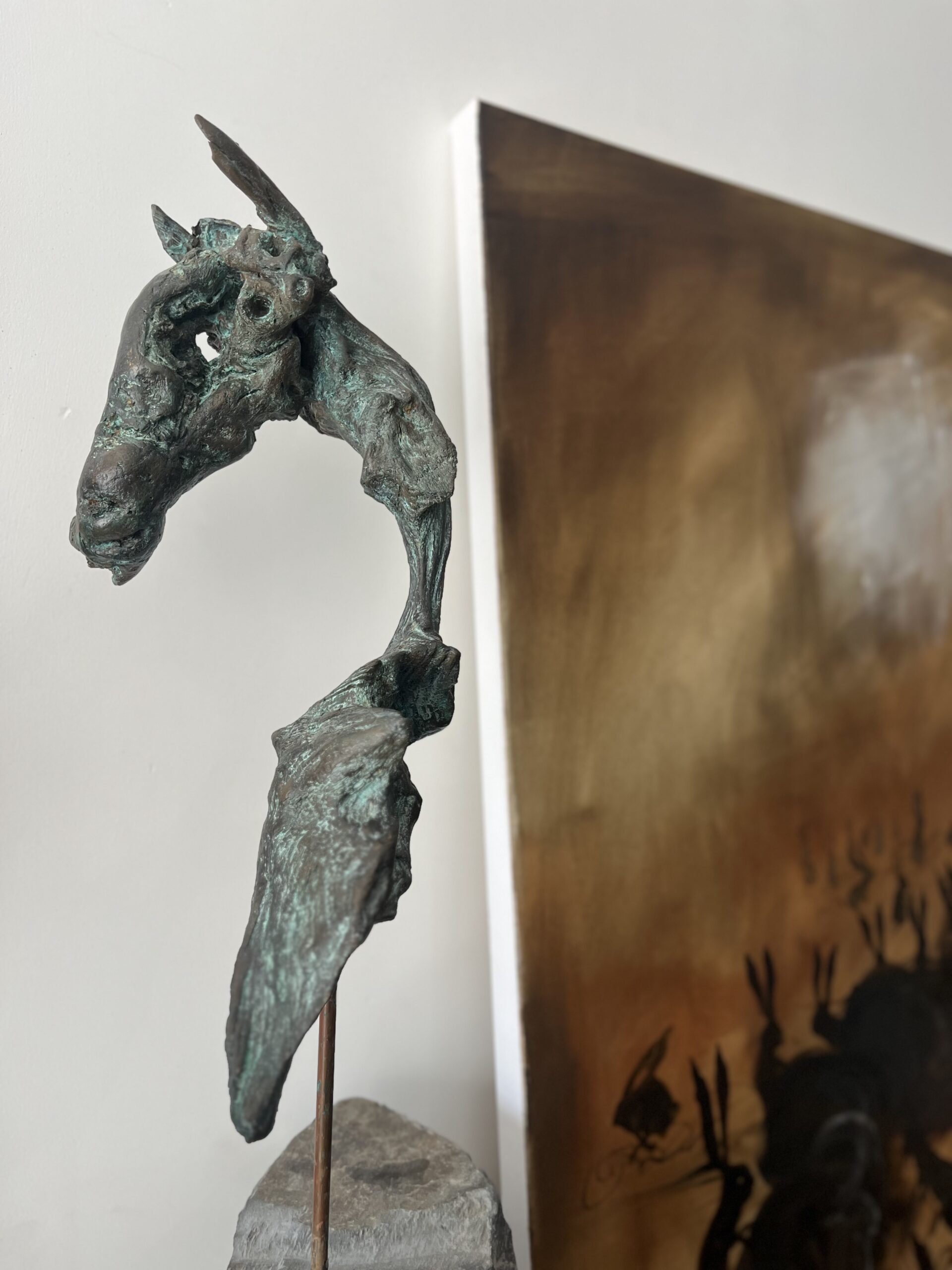
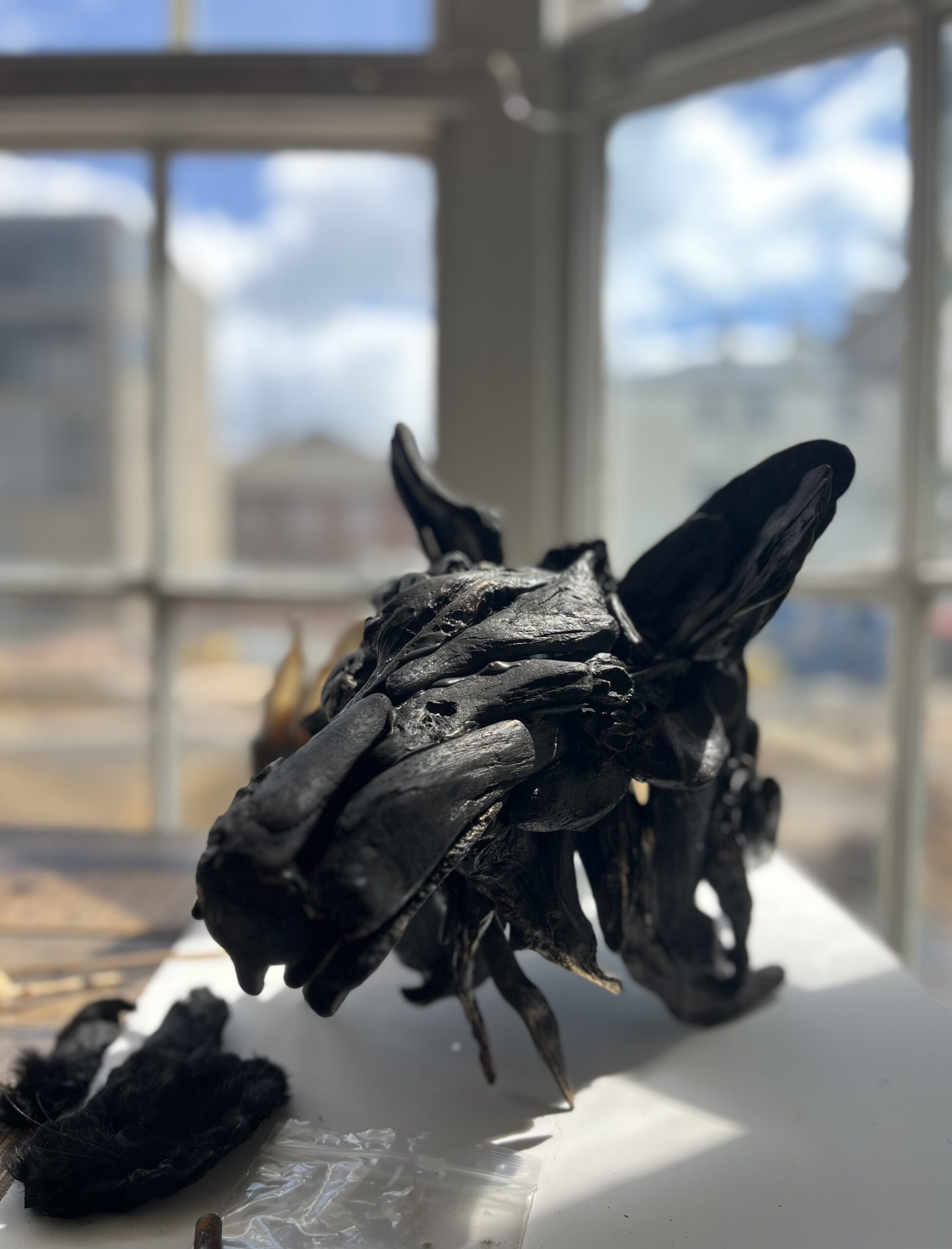
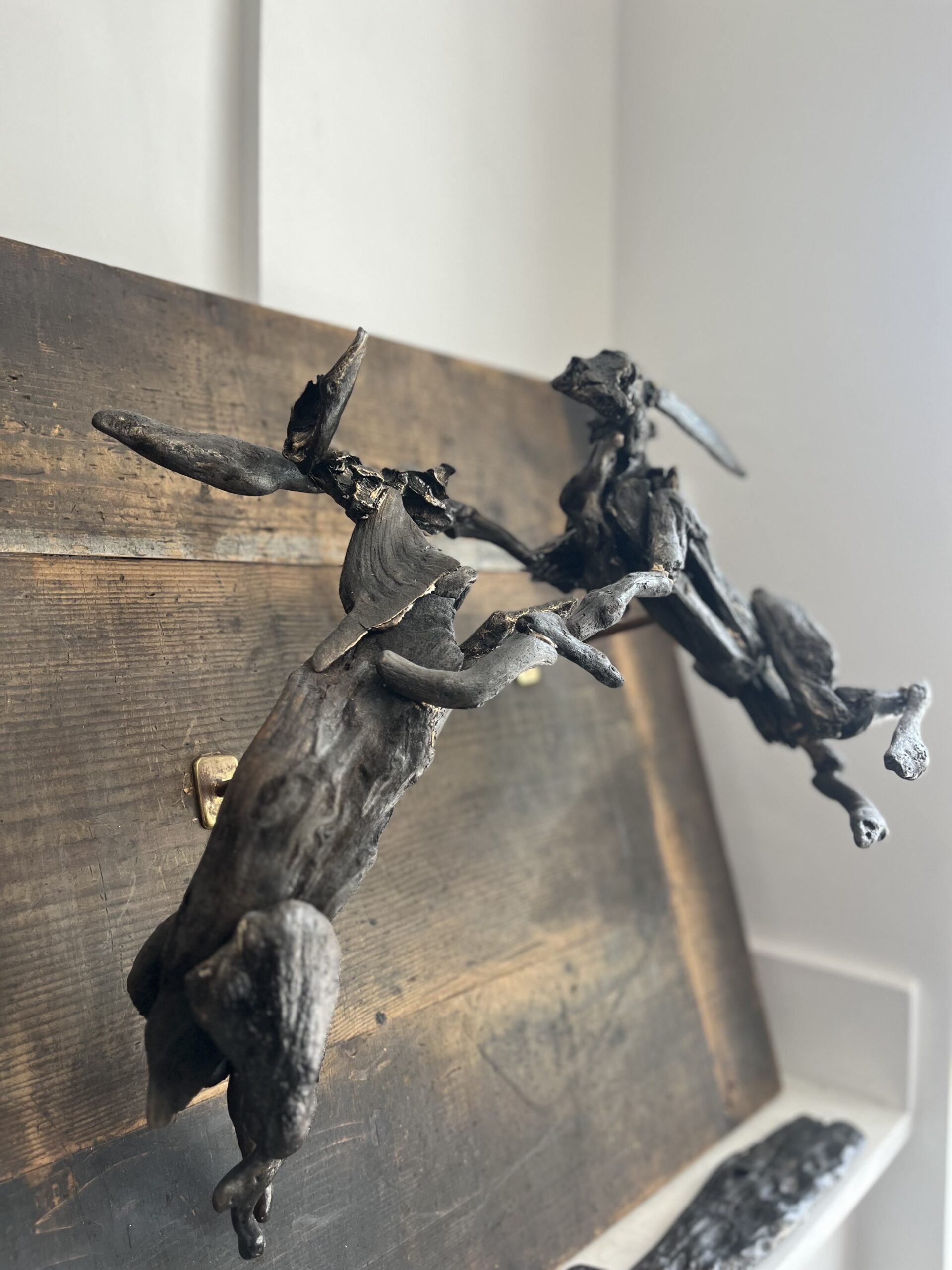
I’m a mixed media artist and I take a lot of inspiration from folk tales, fairy tale and sort of psychological processes of recovery from trauma and I use a sort of fairy tale world to explore ways of putting a person back together again. Which might not sound obvious from the sculptural work but it’s a sort of thread that runs through all my sort of drawn illustration stuff so the sculptures have arrived in tandem with that. And that’s sort of working with fragments and recombining them into new forms, temporary forms. I use animal symbolism to sort of represent different aspects of the psyche.
So although I think a lot of people see my sculptures as just animals, for me, they’re not, they are embodiments of a stage of growth or discovery, or they hold a symbolic place in the narratives through my illustration work.
Tell us about your favourite artwork.
There are countless artworks that have made an impression upon me, (this is a hard question to choose one as the favourite) but I could put Louise Bourgeoise’s Spider / Maman up there. There’s something about the immense scale, the unusual glorification of something so maligned, and the connection with her mother and her history of being a weaver that is altogether very powerful. As an artwork, it was possibly one of the first sculptural forms that I found really arresting, and probably in some way turned my attention towards sculpture as a medium with the capacity to move you.
What’s something people might not know about you?
I would imagine most people don’t know most things about me, so that would be a very long list! Not that I’m particularly guarded, but I think the true depths of a person are rarely accessed by others. I lived in Brussels for a number of years growing up, and something I recall from living there was the sense that most of the life there happens behind closed doors – a secret bar, an amazing music venue, beautiful artworks. It’s all a little harder to find than what we are used to in the UK, and I think in many ways that’s quite interesting. Perhaps the things that take a little more persistence to find hold greater value? I don’t know. I often think I’m still not terribly well adjusted to life in the UK, even after 25 years, but I couldn’t say where else I think I’d fit.
I used to be a prop-maker, shortly after I left art college. I’d got quite good at alginate body casting and so was asked to make body parts and things as film props. I remember meeting some low-budget director outside a Soho production house with a bloody severed hand in a shoebox one rainy afternoon. I then got hired on a film and the first thing they asked me to make was a pregnant belly that looked like the baby was moving inside it under the skin. A fast learning curve! The best thing about that job though was that I got to be Rik Mayall’s make-up artist – I’m no make-up artist but they needed someone fast and I could use a paintbrush – so I got to work with my childhood hero, albeit briefly, and he was every bit as fun as you would have hoped. Legend.
What did exhibiting at Colonnade House lead to & what have you been up to recently?
Taking a studio in Colonnade House was a commitment I made to myself to return to my own artist practice, which had fallen away during the years I was raising my children. I curated an exhibition, entitled M(O)ther, in 2019, collecting artist’s experiences of the less celebrated sides of motherhood; the struggles and anxieties. This was probably when I started working more autoethnographically, which took me to my next show, Crow, which came about from noticing the presence of crows in my life during a particularly challenging few years, and exploring the significance of animal presences in world folk tales. The trajectory of my work was greatly influenced by these pivotal moments, linking together recovery from trauma and animal symbolism, which became my research subject for my MA. Through this I started making the driftwood sculptures, which eventually led to the fox sculpture I had commissioned for Homefield Park last year.
Exhibiting at Colonnade gave me a renewed confidence and belief in my work, and connected me with other artists. I co-founded the Old Cartshed studio with a fellow CH studio member before moving on to my own studio-gallery, Artspace 13 in Worthing, which is where I am now. My work has gained a lot of interest from the visibility I’ve had at Colonnade over the years. Currently, I’m working on a sculpture commission for composer Justine Barker’s forthcoming solo album, who I actually met when she came into the gallery at Colonnade when I was exhibiting there some years ago now. I’m also busy making some new work for my upcoming show at Worthing Museum in the autumn, and there’s still a book that needs compiling of all the drawings from my Nigredo collection, which I exhibited some of in the studio gallery last year.
Tell us about an artist you think we should know about.
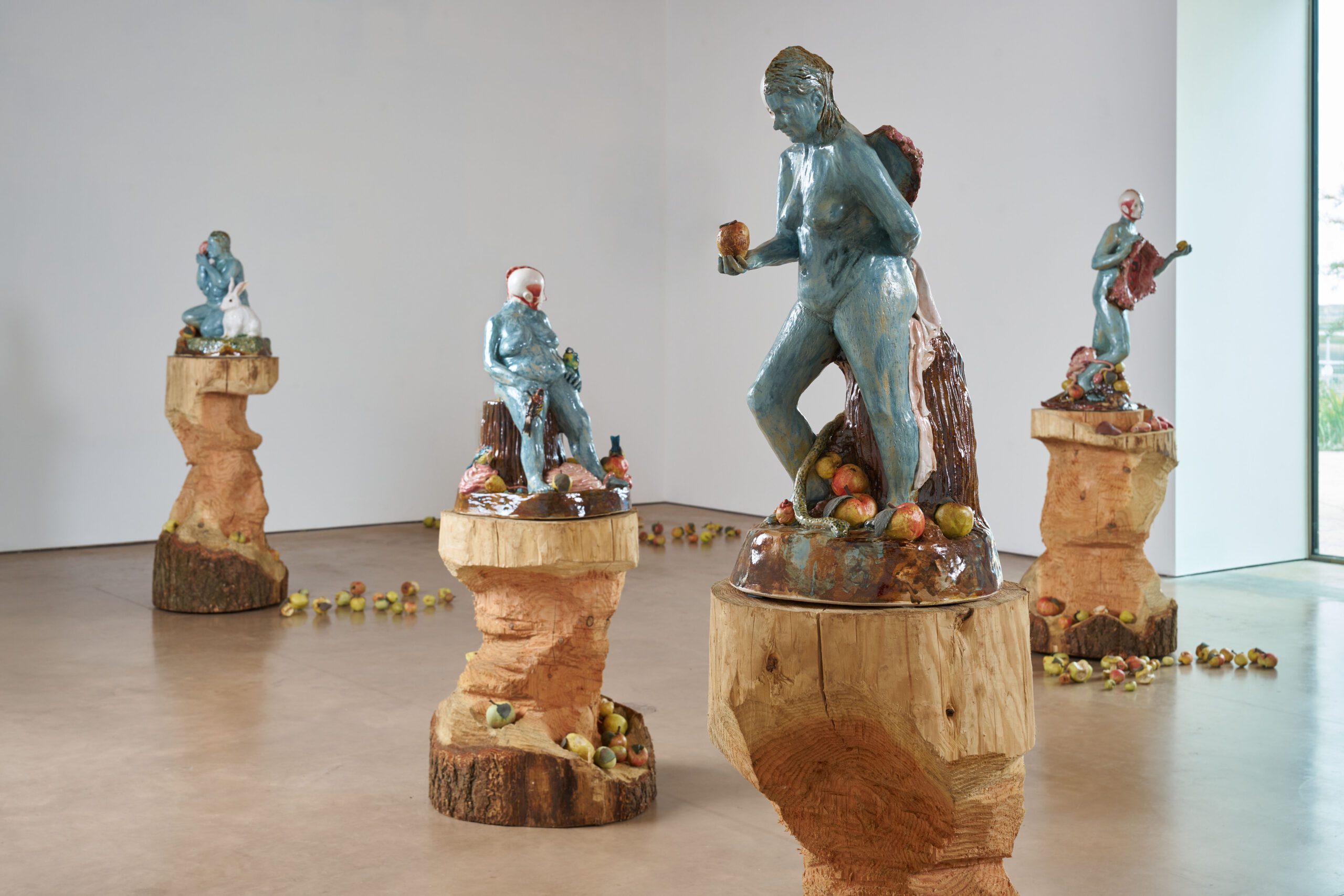
Recently I find I am increasingly interested in the work of other women artists. While researching my MA I became quite captivated by the surreal, visual narrative drawings of Amy Cutler, and also found resonance in my themes of interest with Kiki Smith who also seems to work with mythical animal presences across all kinds of media, but there’s another I want to mention, who happened to be on the fine art degree at Middlesex when I was there too, whose work, “Wild Apples” I recently saw at the Wellcome Collection in “The Coming of Age” exhibition. It was such a strong piece, presenting the female figure in menopause and beyond, depicting several older female bodies sculpted in ceramic, sat upon wooden trunk supports, their bodies cut open, as if by themselves, their entrails on display and the floor beneath scattered with apples in varying states of decomposition. Powerful. The female experience is a strong theme running through her work, and the way she uses ceramics to communicate these themes is quite unique. Definitely one to see.
You can watch our short video of Shona here. You can see more of Shona’s work on her Instagram.
Don’t forget to keep an eye out on our socials with more videos to come over the next few weeks.